
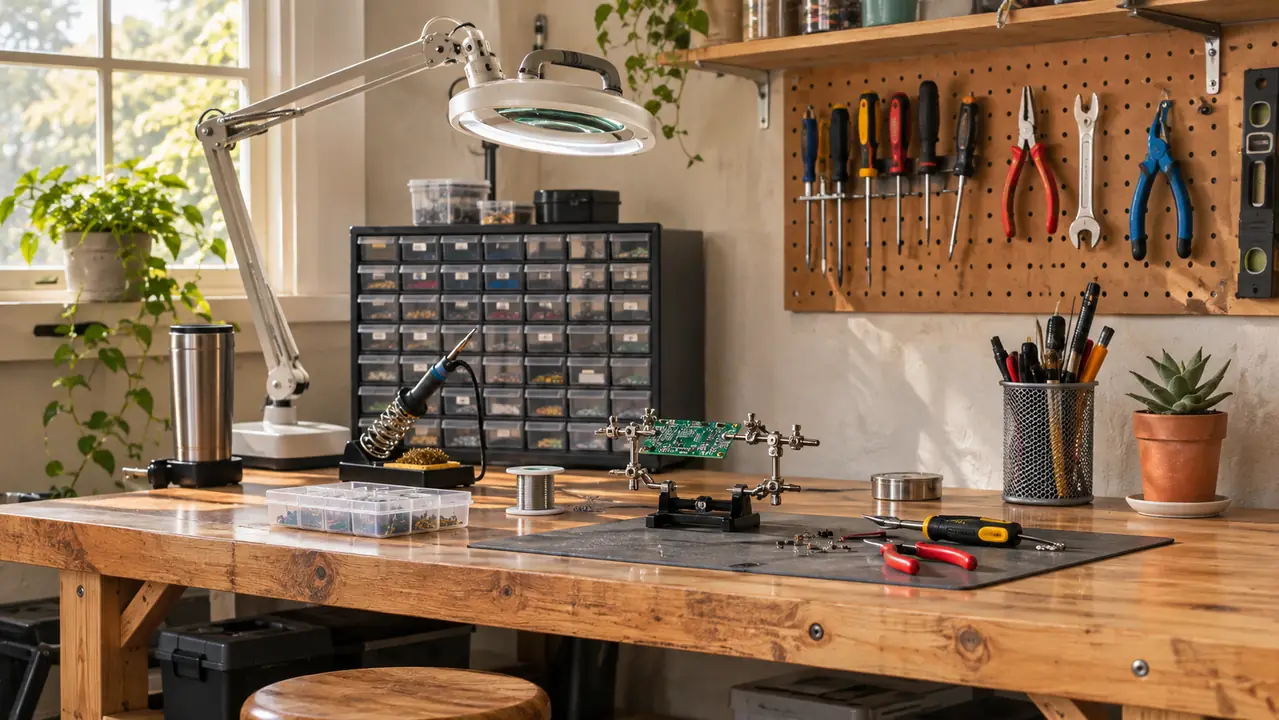
The first soldering iron I owned was a 30-watt pencil I bought at a hardware store for a broken lamp cord. It had no temperature control. You plugged it in, waited a few minutes, and hoped the tip was hot enough. Sometimes it was. Sometimes the solder sat on the pad in a dull blob and I told myself it was fine. For years that was my whole method: hope, then tug the wire to see if it held.
I retired from aircraft avionics in November 2023 after 34 years. My work at the hangar involved wiring harnesses and circuit boards, but the soldering stations there were shop equipment. I never bought one for home. That changed in March 2024, when I picked up the YIHUA 926 III 60W soldering station. It was the second tool I bought for the garage bench, right after a multimeter. The first thing I noticed was the display. I could set a number and read it back. No guessing from the smell of the tip.
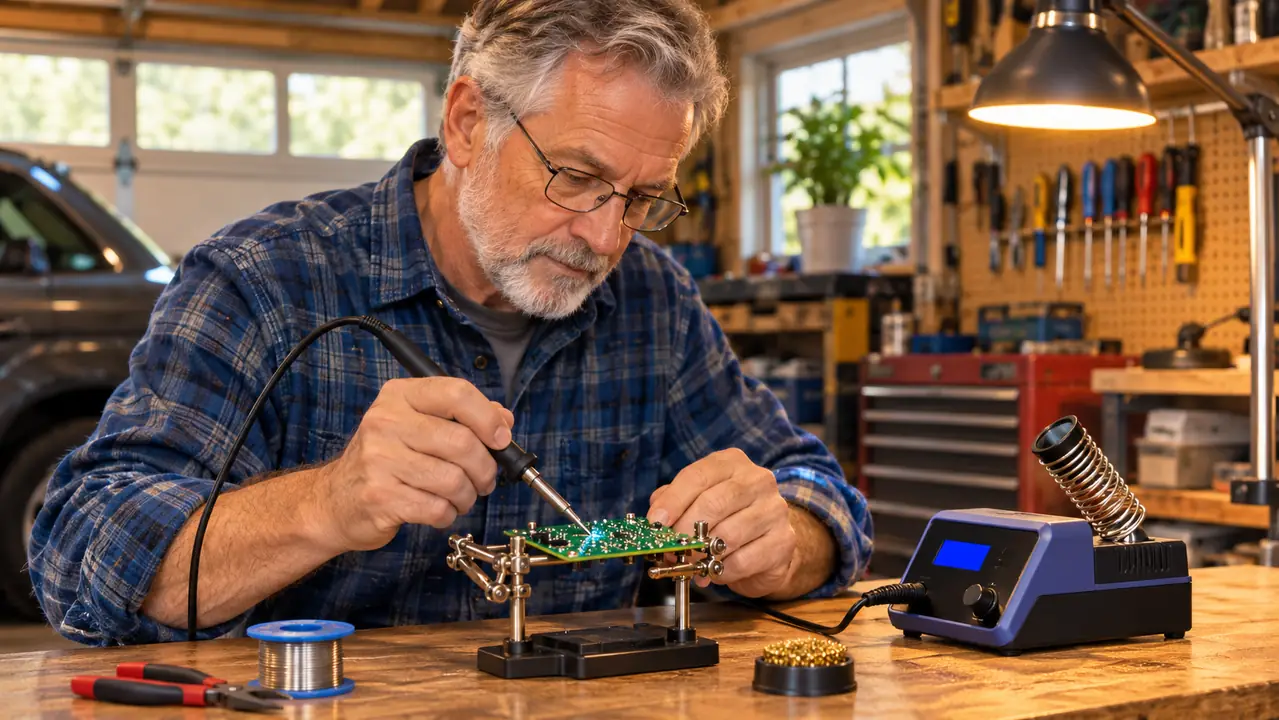
I run it around 650 to 700 °F for leaded solder on through-hole parts. The station holds that range while I move from a resistor to a header pin, and the recovery is quick enough that I do not sit waiting. The 60 watts matter more than I expected. A cheap iron drops heat the moment it touches a ground plane or a larger pad. This one pushes back. The included helping hands hold a board or a wire splice so both of my hands stay on the iron and the solder.
It is not a small thing to leave on the bench. The station measures 7.3 inches deep, 4.5 inches wide and 2.8 inches high, and it weighs 1.8 pounds. That is fine on a six-foot bench. It is not a pencil iron you toss in a drawer. It needs an outlet, and that is part of the deal. I keep mine at the back left corner, next to the magnifier lamp, and the metallic mesh at the rear keeps my forearm from brushing the iron when I reach past it.
My first real project with it was the ELEGOO UNO R3 starter kit in April 2024. I soldered headers, a few wires and a small power section. In May I wired an LED without its resistor and burned it out. That was my mistake, not the station's. What the station gave me was a repeatable temperature while I made the mistake. I could see the joint form and cool, then try again with a fresh LED. The kit's PDF walked me through the lessons, and the station kept the hardware side from becoming a second lesson.
A stable 675 °F does more for a beginner than a drawer full of technique.
Stop guessing what temperature your iron is at
The YIHUA 926 III has a 60-watt element, an LED display and a range from 90 °C to 896 °F. You can switch between °C and °F and set sleep mode for 5, 10 or 30 minutes.
Amazon Check the YIHUA 926 III on Amazon →Most of what the station does on my bench is small and steady: header pins on breakout boards, splices in 22-gauge wire, a cold joint reflowed now and then. None of it is dramatic, and that is the point. That is the review I would give any tool: it should never be the reason you stop.
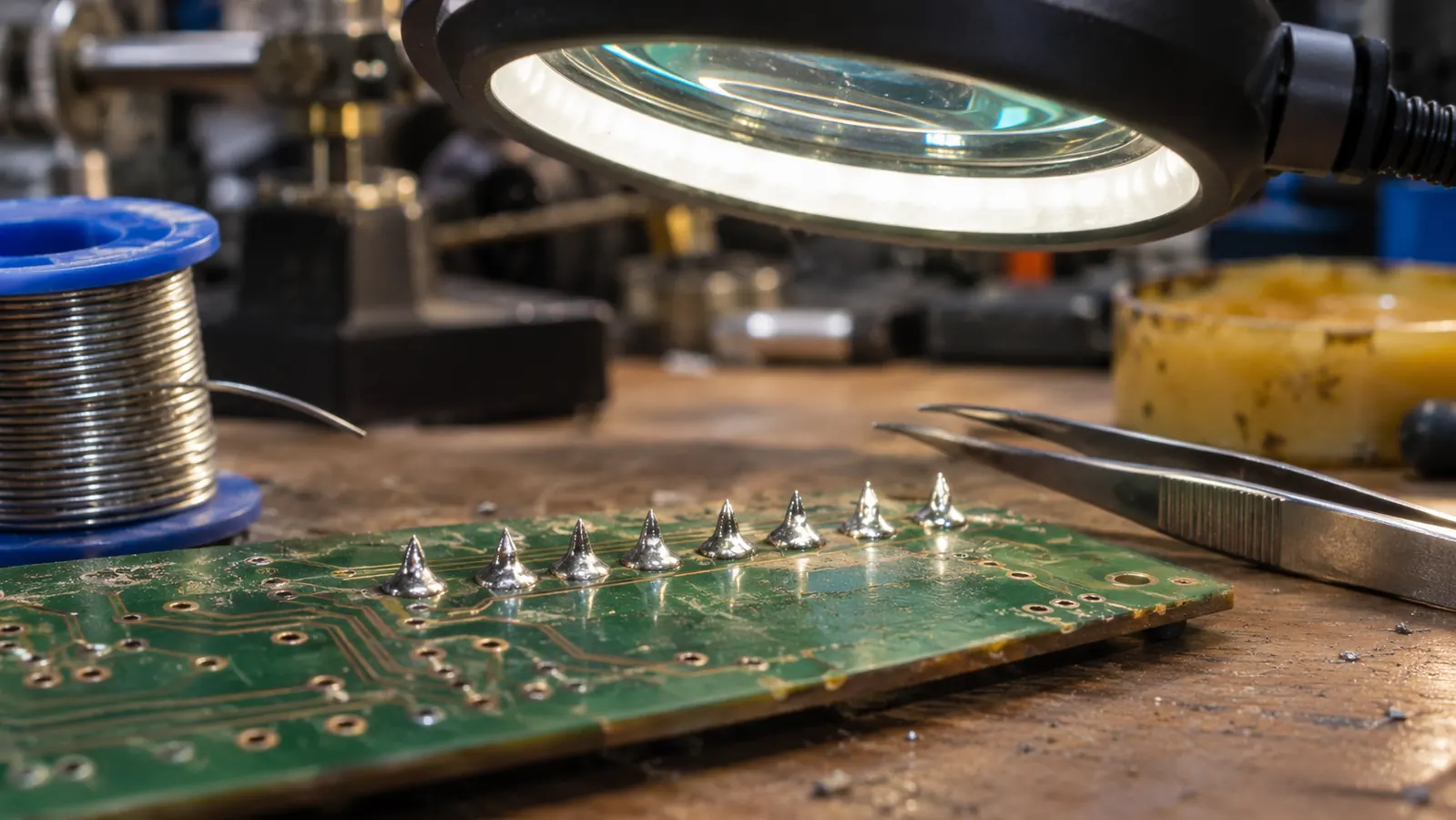
What a station like this teaches is that temperature is a variable. A cheap iron hides that variable. You get one heat, and you learn to work around it. With the YIHUA I could turn down for a small pad and turn up for a ground connection. I could use a fine tip for a header and a wider tip for a wire splice. The six extra tips in the kit are not decoration. They are the difference between a joint you can inspect and a joint you hope will hold.
I also use the sleep mode. I set it for 10 minutes. If I walk away to answer Carol or check the mail, the iron drops to a lower temperature instead of sitting at full heat. That is a small feature that saves tips and saves me from coming back to a tip that has sat at full heat too long. The calibration support is there if the display and the actual tip ever disagree. I have not needed it yet, but I like knowing it exists.
Who is this not for? If you solder one loose wire a year, the old pencil iron in the drawer is enough. If you build a kit every month, or you are teaching yourself on through-hole boards, the station earns its bench space. It is not cordless. It is not a toy. It is a tool that makes the learning curve less steep because it removes one variable from every joint.
What I'd Tell You If We Were Sitting at My Kitchen Table
I would tell you to buy the station before the third kit, not after. I would tell you to practice on a scrap board first, set it around 650 to 700 °F for leaded solder, keep the tip tinned and clean, and heat the pad and the lead before you feed solder. I would tell you that the joint should look like a tiny shiny volcano, not a dull blob. And I would tell you not to buy every accessory at once. The included solder sucker, tweezers and mini wrench cover most of what a beginner needs. Carol asked me what it does that the old iron did not. I said it keeps the temperature where I set it. That sounds small until you have spent an evening chasing a joint that will not wet.
A tool that repeats itself is a tool you can learn from
The YIHUA 926 III is a 60-watt station with an LED display, a 90 °C to 896 °F range, sleep mode at 5, 10 or 30 minutes, two helping hands, six extra tips, a roll of lead-free solder, a solder sucker and tweezers.
Amazon See the YIHUA 926 III on Amazon →