
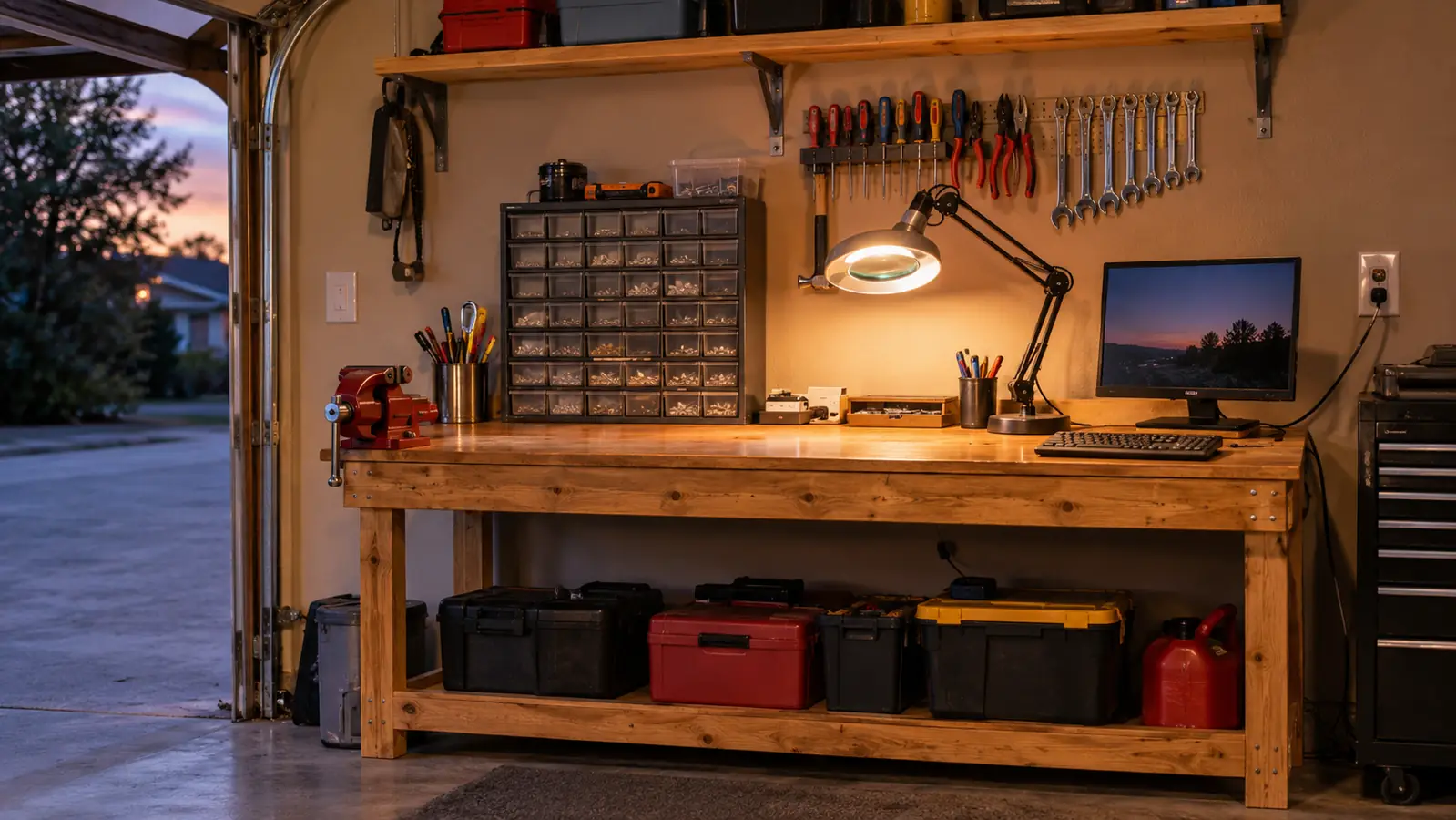
There is a drawer in my workbench that I do not open much anymore. It is the second one down on the left, and it holds the leftovers from four or five projects I started by buying pieces one at a time: a power supply with the wrong connector, a case that did not line up with the board I had, a memory card that needed a reader I did not own.
None of those parts was a bad part. That is the frustrating thing. Each one was a small, reasonable decision made on a Tuesday night at the kitchen table, and maybe one in four of them was wrong. Thirty four years of troubleshooting aircraft wiring taught me to read a spec sheet for a living, and I still got it wrong, because the part nobody warns you about is that the shopping is its own project.
That is the case for the CanaKit Raspberry Pi 4 4GB Starter PRO Kit, and it is why that box has sat at the right end of my bench since October 2024 while the drawer stays shut. It answers the shopping questions before you know to ask them. The board, the power, the storage, the cooling and the cable all arrive in the same cardboard, and nothing is missing at nine o'clock on a Saturday night when you finally have time to sit down.
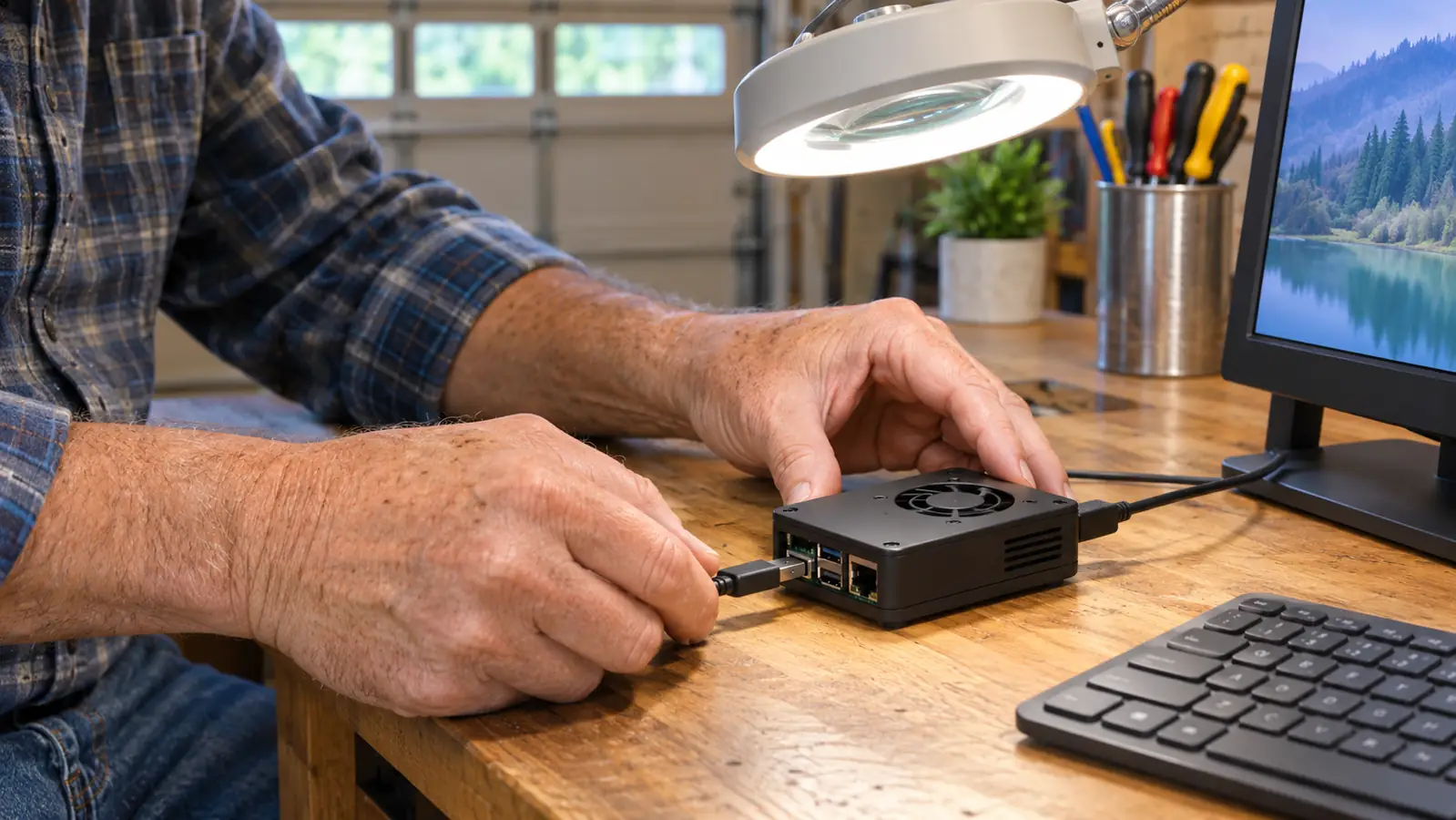
I bought it in October 2024, eleven months into retirement and after the starter kit on the left side of the bench had taught me enough to want a real computer instead of a microcontroller. I unboxed it on a Saturday morning, set the board into the case under the magnifier lamp, and ran the six foot display cable to the small spare monitor I keep for exactly this kind of thing. The card was already loaded. It came up to a desktop on the first press of the switch, and I sat there feeling mildly cheated out of the struggle.
What comes in the box matters more than it sounds. The 3.5A USB-C supply from CanaKit is rated for what the board actually draws and carries a noise filter, so it is not a phone charger pressed into service. The case has an integrated mount for the fan, the fan itself is a low noise bearing unit, and there is a set of heat sinks in the bag. The PiSwitch is a small thing and I use it every day.
Nothing in that box sent me back to a website to order the part I forgot. Across four or five loose part projects, that had never once been true.
The kit I would hand a beginner before I handed them a shopping list
One box, one Saturday, a working desktop before lunch. Check the current listing, the bundle changes more often than you would think.
Amazon Check Today's Price on Amazon →The first job I gave it was small on purpose. I wanted a temperature logger for the garage, something that would write a reading to a file every few minutes so I could see how cold the bench gets in January. That meant Python, and it meant learning where Linux keeps things. I wrote it badly, then badly again, then correctly on the third try, and it has been running on and off for two years.
Here is what the kit actually bought me. Not the board, a board is a board. It bought me the absence of a certain kind of evening, the one where you have ninety minutes before dinner, you sit down to learn something, and you spend all ninety discovering that the thing you ordered in September does not fit the thing you ordered in October. I have had a lot of those evenings. I have not had one since.
The parts I would have gotten wrong are the parts the box settled. Heat sinks, because I would not have thought about them until the board was warm. A supply from CanaKit rated for the current a Pi 4 pulls. A card that is Class 10 and already imaged, plus the little USB reader so I can back it up later without hunting for an adapter in the drawer.
What the box does not do is the other half. It will not teach you the command line. It will not explain why your script wrote an empty file at three in the morning. It handed me a working machine and then got out of the way, and the getting out of the way is the part I did not expect to appreciate as much as I do.
Where beginners get stuck, in my experience, is not the hardware. It is the hour after the first boot, when the desktop appears and nothing tells you what to do next. My advice is to give it a job the same afternoon. A clock. A log file. Anything with an output you can look at. The box gets you to the desktop. The job gets you off it.
What I'd Tell You If We Were Sitting at My Kitchen Table
If you were across from me with a cup of coffee, you would get the honest version. Buy the box if your goal is to learn on the thing rather than to shop for the thing, and buy it if you already have a monitor with an HDMI input and a USB keyboard sitting around. Do not buy it expecting it to make you a programmer, because it will not, and I would rather say that plainly now than have you find out in March. Carol asked me what it does, the way she asks about everything that lands on that bench, and the answer I gave her was that it turns an evening into a small finished thing. That is the whole pitch, and it is enough.
Two years on the bench, and it still comes up on the first press
If you have been meaning to learn Linux or Python and keep stalling at the parts list, this is the shortcut that skips the parts list.
Amazon See the current kit on Amazon →